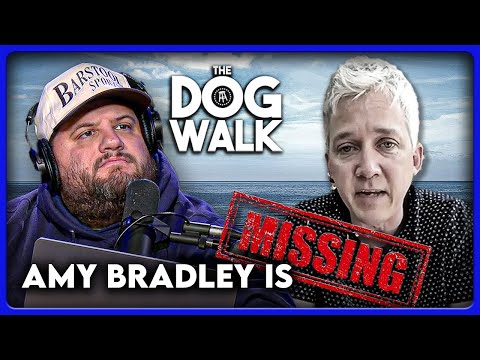
**BOMBSHELL NEW INFORMATION REGARDING AMY BRADLEY**
Jan 7, 2026
Key Takeaways Presented in the Video:
1) Central claim presented
The video asserts that critical eyewitness information in the Amy Bradley case was reported earlier than publicly acknowledged, but was not promptly disclosed.
For years, it has been stated that eyewitness information identifying Amy Bradley with 'Musician A' first emerged early Friday morning. The video claims this is inaccurate.
According to the account presented:
Eyewitnesses Crystal and Lori reported their sighting to the cruise line on Thursday afternoon, after returning to the ship and seeing missing-person flyers.
At that time, the family and federal investigators were already back on board.
This information was allegedly not passed on to either the family or investigators until early Friday morning, when the family encountered Crystal and Lori directly.
2) Eyewitness account by Crystal and Lori
Crystal and Lori state they saw Amy Bradley enter the ship’s glass elevator with Musician A between approximately 5:30 and 6:00 a.m.
They report that Musician A returned alone roughly 10–15 minutes later.
The eyewitnesses had previously interacted with Musician A during the cruise.
After returning alone, Musician A reportedly stopped and spoke with the eyewitnesses, supporting positive identification.
Amy was described as wearing blue shorts and a white T-shirt.
Crystal and Lori did not initially realize Amy was missing until seeing flyers later that day.
3) Disputed reporting timeline
The video contrasts two timelines:
Public narrative:
Crystal and Lori’s information surfaced Friday morning and was immediately acted upon.
Claim presented in this video:
Crystal and Lori reported the sighting to ship personnel Thursday afternoon, but the information was withheld for several hours.
This delay is described as occurring during the most critical early window of the investigation.
4) Security report inconsistencies highlighted
The video references internal ship security documentation and raises concerns about discrepancies.
A. Notification timing
A senior security officer’s report states they first learned of a missing passenger at approximately 7:35 a.m.
The video claims this conflicts with earlier interactions suggesting awareness closer to 7:00 a.m.
B. Prior knowledge question
'Musician A' allegedly approached a family member expressing concern before security documentation indicates the disappearance was formally recognized.
The video questions how this knowledge could have existed prior to official acknowledgment.
5) Ship searches questioned
Security reports indicate searches of public areas, crew quarters, and guest cabins.
The video challenges these claims, stating the searches were:
Delayed
Logistically implausible as described
In some cases reliant on crew self-reporting
Passengers later contacted the family stating their cabins were never searched, contradicting official reports.
6) Statements attributed to Musician A
Security documentation is cited as acknowledging that Musician A initially made false statements regarding their whereabouts.
Statements allegedly changed only after being confronted with access or timing records.
Polygraph testing is described as inconclusive.
Later public statements by Musician A are presented as inconsistent with documented timelines.
7) Nightly security logs examined
The video highlights repeated language across nightly security reports stating certain venues were “quiet” and “cleared” by a set time.
These reports conflict with other documentation placing crew members in those same areas later.
The repetition is presented as possible templating or deliberate misreporting.
8) Federal investigation concerns raised
A. How investigators became involved
The video states that federal involvement was initiated by family members contacting authorities independently.
It asserts the cruise line did not voluntarily escalate the case.
B. Witness handling
Crystal and Lori later reported feeling their account was treated dismissively.
Additional corroborating witnesses—such as a parent who let the eyewitnesses into their cabin around 6:00 a.m., and a relative who advised them to report what they saw—were allegedly never formally interviewed.
9) Internal communications cited
The video references official correspondence thanking ship security personnel for cooperation.
This correspondence is presented as evidence of a close working relationship during the investigation.
Amy Bradley is described using generic language rather than by name.
10) Broader issues raised
The video argues that:
The cruise line controlled the early investigation
Passenger notifications were delayed
Independent law-enforcement oversight was absent during the most critical period
Evidence handling and reporting were subject to conflicts of interest
11) Advocacy issues discussed
The video concludes by calling for:
Missing-passenger cases to be treated as crime scenes
Immediate notification systems for passengers and crew
Independent law-enforcement authority onboard cruise ships
Structural reforms to prevent similar cases